
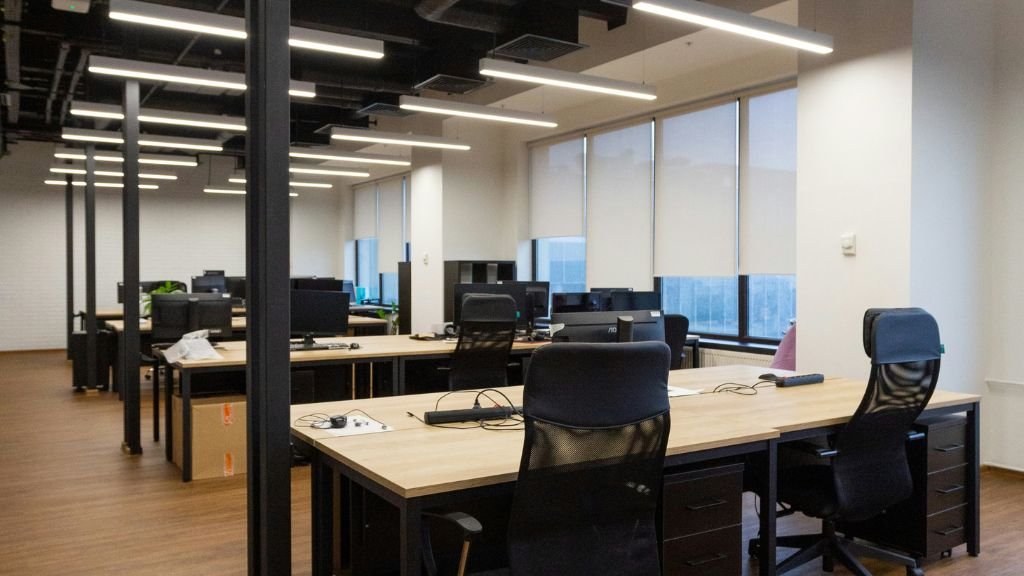
Most business owners think of an office build-out as a cost. You write the check, you get a finished space, and then you spend the next few years hoping you made the right call. But what if that thinking is backwards?
A well-planned office build-out is not just a construction project. It is a business decision that should generate real, measurable returns starting in year one. When done right, the space you build can lower your overhead, increase your productivity, attract better tenants or clients, and even improve your lease terms.
The problem is that most build-outs do not pay for themselves because they were never planned with that goal in mind.
What Does "Paying for Itself" Actually Mean?
Before we dig into how, it helps to be clear about what we mean when we say a build-out should pay for itself.
We are not talking about magic. We are talking about a simple concept: the financial benefits of building out your space should equal or exceed the cost of the project within a few years.
Those benefits can come from several directions. Maybe you are capturing rent from a tenant who was previously locked out because the space was not usable. Maybe your team is more efficient in a space designed for how they actually work.
Maybe you negotiated a tenant improvement allowance that covered most of the construction costs upfront. The return does not have to come from one source. It usually comes from a combination of factors working together.
The Biggest Mistake Business Owners Make
The most common mistake is treating the build-out as a fixed expense rather than an investment with a return.
When you think of it as a cost, you try to minimize it. You pick the cheapest contractor, skip the planning phase, and make decisions on the fly. The result is a space that technically functions but does not perform. It costs you money in inefficiency, in employee dissatisfaction, in client perception, and sometimes in expensive repairs or changes down the road.
When you treat it as an investment, you think differently. You ask what this space needs to do for us. You plan the layout around workflow. You choose materials that hold up and keep maintenance costs low. You build something that actually works for the people inside it.
That shift in mindset is where the return begins.
Office build-out Cost Per Square Foot: What to Expect
One of the first questions business owners ask is what the office build-out cost per square foot will be. It is a fair place to start. A per-square-foot figure lets you compare spaces and sketch a budget before the design is finished. Treat it as a starting point for your budget, because the number that counts comes from an estimate for your specific space.
What Current Benchmarks Show
National figures run high. JLL's 2026 U.S. and Canada fit-out guide puts the average for a medium-quality office at about $295 per square foot, with baseline projects near $255 and high-specification projects near $355. Those benchmarks are built around corporate offices, where mechanical, electrical, security, and technology systems take up a large share of the budget. A typical small or mid-size suite may look different.
Dallas-Fort Worth is one of the more affordable places to build. JLL ranks Dallas among the most cost-competitive fit-out markets in the country, with a cost index near 70 where New York City is 100. For a local reference point, a 2026 Dallas-Fort Worth commercial remodeling guide puts retail and service space build-outs at roughly $80 to $150 per square foot. Office work has its own scope, but it shares many of the same cost drivers.
Prices are also rising. JLL reports that fit-out costs across the U.S. and Canada climbed about 10% over the past year, driven by skilled labor shortages, tariffs on materials, and growing technology requirements.
What Moves Your Cost Per Square Foot Up or Down
Two suites of the same size can price very differently. These are the factors to review with your contractor:
Shell condition: Raw first-generation space needs HVAC distribution, restrooms, electrical, flooring, and ceilings built from scratch. A second-generation suite that already has some of that in place usually costs less.
Electrical and technology: Power, data, security, and AV add up quickly. In JLL's data, mechanical and electrical work is about 29% of a typical fit-out budget, and security, IT, and AV add about 10% more.
Layout: Private offices, conference rooms, and sound-rated walls cost more per square foot than open work areas.
Finish level: Flooring, ceilings, lighting, and millwork can move the total in either direction.
Hidden work: Electrical service upgrades, fire code requirements, and structural reinforcement for rooftop HVAC units are rarely visible, but they need a place in the budget.
What a Per-Square-Foot Number Usually Leaves Out
Many published benchmarks cover construction only. Some guides state outright that their figures are limited to physical construction. Design and engineering fees, permits, furniture, phone and network equipment, signage, moving costs, and a contingency for surprises are typically extra. Ask every contractor what their number includes before you compare it to anyone else's.
Turning Cost Per Square Foot Into a Real Budget
Here is a simple example. Say you are leasing a 2,500-square-foot suite and an early estimate comes in at $100 per square foot. That puts the project at about $250,000. The same Dallas-Fort Worth guide reports that tenant improvement allowances now average roughly $60 to $70 per square foot for many retail and office spaces. At $60 per square foot, your landlord would contribute $150,000, and you would cover the remaining $100,000.
The $100 figure is an example, not a quote for your project. Allowances depend on the building, the lease term, and your negotiating position, and most landlords do not let you apply them to furniture or equipment. A construction consultant can check an early estimate against your space before you sign a lease, which is when you have the most room to negotiate.
How Office Build-Out Costs Can Be Offset Before You Even Start
One of the most underused tools in commercial real estate is the tenant improvement allowance, often called a TI allowance.
If you are leasing a commercial space, your landlord may be willing to contribute money toward the build-out in exchange for you signing a longer lease. This is not charity - it is a standard negotiating tool, and many business owners leave serious money on the table by not pushing for it.
A good construction consultant can help you understand what a reasonable TI allowance looks like for your type of space, how to structure your lease negotiations, and how to scope the project so the allowance covers the most critical work.
At The Tom Day Company, construction consulting is part of how we help clients enter projects with their eyes open. If you are heading into a commercial lease negotiation, talking to someone who understands construction costs before you sign is one of the smartest moves you can make.
Designing for Efficiency, Not Just Aesthetics
A beautiful office that slows your team down is not an asset. It is a liability with good lighting.
The layout of your space has a direct impact on how much work gets done and how much energy gets wasted on movement, interruptions, and inefficient processes. When you plan your build-out around how your people actually work - not how you assume they work - you get a space that makes the job easier.
This might mean consolidating collaboration areas so your team does not spend twenty minutes walking between rooms for a five-minute conversation. It might mean building private focus areas that reduce the constant noise that kills concentration. It might mean wiring the space correctly from the start so you are not retrofitting technology two years later.
None of this requires spending more money. It requires spending money on the right things, in the right order, with the right plan.
Reducing Long-Term Maintenance Costs
One of the quiet ways a build-out pays for itself is by reducing what you spend to keep the space running over time.
Low-quality finishes, cheap mechanical systems, and rushed installations all have something in common: they fail. And when they fail, you pay again. Sometimes you pay more than you would have spent doing it right the first time.
Choosing the right materials, working with experienced tradespeople, and building with maintenance in mind are not luxury decisions. They are cost-reduction strategies that pay off over the life of the building.
The Tom Day Company also offers ongoing maintenance services through SD Maintenance Services, which means clients who build with us can continue to protect that investment long after the construction is complete. When the people who built the space are also helping maintain it, you lose far less to deferred repairs and reactive fixes.
The Revenue Side of the Equation
Lowering costs is only half the picture. A smart office build-out can also generate revenue directly.
If you own a commercial property with underutilized space, a targeted build-out can convert that dead square footage into leasable space. Landlords and property owners in McKinney who invest in finishing out unoccupied suites consistently see faster lease-up and stronger rental rates compared to vacant, unfinished spaces.
For owner-occupied businesses, the equation is a little different but equally real. A professionally built space signals stability and success to clients. It affects how vendors treat you, how candidates respond to job offers, and how your own team feels about coming to work. Those are not soft benefits - they translate directly into retention, recruitment, and revenue.
Why Planning Is the Most Important Phase
The build-out that pays for itself almost always starts with a thorough planning process. The build-out that bleeds money almost always skips it.
Planning is where you figure out what the project actually needs to accomplish, what it will realistically cost, what the timeline looks like, and what decisions need to be made early to avoid expensive changes later. It is also where a knowledgeable partner can point out options you did not know existed - better materials at a similar price point, layout changes that unlock more usable square footage, or phasing strategies that let you open and operate sooner.
Rushing into construction without a plan is one of the most reliable ways to guarantee that your build-out does not pay for itself. You end up paying for decisions twice: once to make them, and once to undo them.
What to Look for in a Commercial Build-out Partner
Not every contractor approaches a project with your financial outcomes in mind. Many are focused on completing the work and moving to the next job. That is not necessarily bad - it is just not the same as working with a team that treats your project as if it were their own.
Here is what actually matters when choosing who to work with on a commercial build-out:
Experience with your type of space - Office build-outs have different requirements than restaurant or retail construction. You want a team that has done this before and knows where the hidden costs live.
Transparency about costs - You should understand exactly what you are paying for and why. Any contractor who is vague about line items is a risk.
Involvement in the planning phase - If a contractor does not want to talk until they are ready to swing a hammer, that is a red flag.
A track record of accountability - Ask for references. Ask what happened when something went wrong on a past project. How a team handles problems tells you more than how they handle smooth jobs.
The Tom Day Company is a family-owned commercial construction firm that has been serving clients in McKinney and North Texas since 2009. We stay closely involved in every project because that is how quality actually happens.
A Real-World Example of a Two-Year Payback
Here is a simple version of how the math can work.
Imagine a property owner in McKinney with a 2,000-square-foot suite sitting empty. The unfinished space has been sitting vacant for six months because prospective tenants want something move-in ready.
The owner invests in a focused build-out - clean finishes, functional layout, proper lighting and HVAC - at a total cost of $80,000. The finished suite now leases at $22 per square foot annually, generating $44,000 per year in rent.
At $44,000 in annual rent, the build-out would pay for itself in just under two years through lease revenue alone. And because the work was done right the first time, maintenance costs are low and the tenant stays.
This is not a theoretical scenario. It is what happens when a build-out is approached as a business decision.
Common Questions About Office Build-outs
-
It depends on the market, the condition of the space, and the finish level. JLL's 2026 guide puts the U.S. and Canada average for a medium-quality office fit-out at about $295 per square foot, and Dallas ranks among the most affordable major markets. A 2026 Dallas-Fort Worth remodeling guide lists retail and service build-outs at $80 to $150 per square foot. For a firm number, you need an estimate based on your space and plans.
-
It depends on the size and complexity of the project. A smaller tenant finish-out might take four to eight weeks. A larger, more complex office build-out could take several months. The planning and permitting phase often takes as long as the construction itself, so starting early is always the right move.
-
It varies. If you are leasing, your landlord may contribute through a tenant improvement allowance, and you cover the rest. If you own the property, the cost is yours, but so is the long-term asset value. A construction consultant can help you structure the financial arrangement before you commit.
-
Yes, in most cases. A well-finished space is easier to lease, commands higher rents, and is more attractive to buyers if you ever sell. Unfinished or poorly finished space is a drag on value.
-
A tenant finish-out is a type of office build-out where raw or semi-finished commercial space is built out to meet the specific needs of a tenant. It includes things like interior walls, flooring, ceilings, lighting, HVAC distribution, and electrical. It is one of the most common types of commercial construction projects.
-
If you have never navigated a commercial build-out before, yes - it is almost always worth it. A consultant can help you avoid costly mistakes, negotiate better terms, and understand what your project should realistically cost.
Make Your Office Build-Out Pay for Itself
An office build-out does not have to be a sunk cost. With the right planning, the right partner, and a clear focus on financial outcomes, it can start delivering a measurable return in year one. The difference between a build-out that performs and one that just exists is almost always made in the planning phase.
If you are ready to approach your next project with that mindset, learn more about how commercial construction consulting can help you build smarter from the start. Call The Tom Day Company at 214-504-1450 to talk through your project.